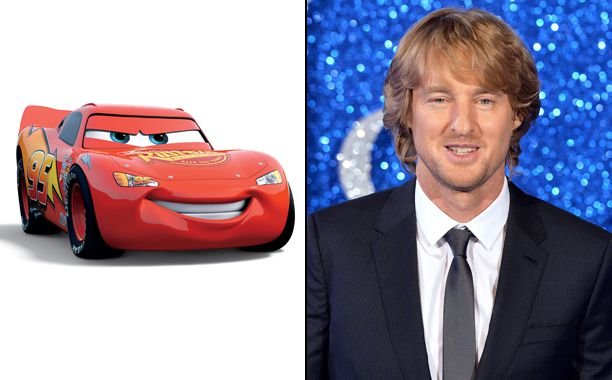
"Ka-chow!" With a flash of red and an undeniable swagger, Lightning McQueen raced into our hearts in 2006, instantly becoming a household name. But behind that iconic catchphrase and sleek design lies a fascinating story of ingenuity, inspiration, and the pivotal role of a talented voice actor and the creation of Lightning McQueen itself. This isn't just about a cartoon car; it's about the magic of Pixar bringing a character to life, from the initial spark of an idea to the enduring legacy of a champion.
Pull up a virtual pit stop, because we’re about to take a deep dive into the engine room of how this beloved racing legend came to be.
At a Glance: Bringing Lightning McQueen to Life
- The Visionary: Director John Lasseter's cross-country road trip inspired the world of Cars.
- The Homage: Lightning McQueen's name honors late Pixar animator Glenn McQueen, not the famous actor Steve McQueen.
- The Iconic Voice: Owen Wilson was personally invited to audition by Lasseter, securing the role after his impressive work in Shanghai Noon.
- A Chorus of Talent: While Wilson is the primary voice, 15 other actors have lent their voices to Lightning McQueen across various media, including Keith Ferguson and Ben Rausch.
- From Sketch to Screen: The character evolved from an early concept called 'The Yellow Car' before finding its distinctive red racer persona.
- A Box Office Champion: The original Cars film was a massive success, spawning two sequels, two spin-offs, and multiple TV series, cementing McQueen's status as a global icon.
The Spark of an Idea: From Road Trip to Radiator Springs
Before Lightning McQueen became a global phenomenon, he was a glimmer in the eye of Pixar director John Lasseter. The genesis of Cars wasn't in a boardroom but on the open road. In 1998, Lasseter embarked on a cross-country road trip with his family, immersing himself in the often-overlooked charm of small towns and the iconic American landscape. It was this journey, and the nostalgia for classic Route 66 culture, that ignited the initial concept.
Initially, the idea was simply "The Yellow Car," a far cry from the vibrant red racer we know. Production began, but like a sudden detour, it was briefly paused as Pixar shifted focus to Toy Story 2. When Cars roared back into development, the core concept solidified: a world populated by anthropomorphic vehicles, each with their own personality, dreams, and challenges.
More Than a Name: Honoring a Fallen Friend
One of the most touching aspects of Lightning McQueen's creation lies in his very name. While many assume a connection to the legendary actor Steve McQueen, the truth is far more personal and poignant. Lightning McQueen was named in honor of Glenn McQueen, a gifted Pixar animator who tragically passed away in 2002. It was a heartfelt tribute from his colleagues, ensuring that a piece of Glenn’s spirit would live on in a character that embodied speed, determination, and ultimately, heart. This decision underscores Pixar's commitment to its family of creators and the profound impact individuals can have on cinematic history.
Casting the Voice of a Champion: Owen Wilson's Iconic Role
Bringing an animated character to life isn't just about visuals; it's about giving them a soul through their voice. For Lightning McQueen, that soul came courtesy of actor Owen Wilson. His signature laid-back, yet charming and often slightly self-deprecating delivery proved to be a perfect match for the rookie racer’s journey from arrogant hotshot to a true champion.
The story of Wilson's casting is a testament to the power of a director's vision. John Lasseter, having been thoroughly impressed by Wilson's performances in the action-comedy hits Shanghai Noon (2000) and its 2003 sequel, recognized a unique quality in his voice. He saw in Wilson the nuanced blend of confidence, vulnerability, and humor that would make Lightning McQueen relatable and lovable, despite his initial flaws. Lasseter personally invited Wilson to audition, a move that would ultimately cement one of animation's most memorable voice-actor pairings.
Wilson’s performance became more than just lines of dialogue; it became the very essence of Lightning McQueen. His distinctive "Wow!" and the evolving emotional depth he brought to the character allowed audiences to connect with a talking car on a deeply human level. It’s this connection that powered the original film to a massive box office success, ranking number one on its opening weekend and holding the record for the highest opening weekend for a car film until 2009.
More Than Just One Voice: The Many Faces (and Voices) of Lightning McQueen
While Owen Wilson is synonymous with Lightning McQueen, the truth is that a remarkable 16 actors have lent their vocal talents to the character across 27 distinct appearances. This broad spectrum of voices highlights the character's pervasive presence across various media and international adaptations.
The Underrated Understudies: Other Key Voices
For a character as popular as Lightning McQueen, one voice actor simply isn't enough to cover every iteration, video game, short, or commercial. This is where other talented performers step in:
- Keith Ferguson: Often considered the "other" voice of Lightning McQueen, Ferguson has an extensive résumé portraying the character. You've likely heard him in titles like Disney Infinity, numerous video games, the Cars (2008) short, and even in commercials for major brands like AT&T and State Farm. His ability to perfectly emulate Wilson's voice ensures consistency across the broader Cars universe.
- Ben Rausch: Gamers will recognize Rausch’s take on McQueen from Cars 3: Driven to Win, where he captured the character’s racing spirit in an interactive setting.
- International Stars: The global appeal of Cars necessitated a cadre of international voice actors. Talents like Hiroshi Tsuchida in Japan and Massimiliano Manfredi in Italy provided the voices for Lightning McQueen in the original Cars (2006) and Cars 2 (2011) films, allowing the character to resonate with audiences worldwide in their native tongues.
- Parody and Cameo Voices: Lightning McQueen’s cultural footprint is so vast that he’s even been parodied in shows like Mad and Robot Chicken. In these comedic takes, actors such as Hugh Davidson, Kevin Shinick, and Seth Green have put their own spin on the character, often for hilarious effect.
This diverse group of actors underscores the ubiquity of Lightning McQueen, ensuring his presence is felt across every conceivable platform, from major motion pictures to fleeting commercial spots and parody sketches.
Building a World: The Cars Franchise Phenomenon
The success of the original Cars film wasn’t just a flash in the pan; it laid the groundwork for a sprawling franchise that has captivated audiences for nearly two decades. The initial film's emotional depth, stunning animation, and memorable characters resonated deeply, leading to an expansion of the universe that few animated features achieve.
From Piston Cup to Disney+: McQueen's Evolving Journey
Lightning McQueen's journey didn't end with winning the Piston Cup. His story continued through:
- Sequels: Cars 2 (2011) saw McQueen reluctantly drawn into an international spy adventure, while Cars 3 (2017) explored themes of aging and legacy as he faced a new generation of high-tech racers. He remained the lead in the first and third films, taking a supporting role in the second.
- Spin-offs: The world expanded with two airborne spin-off films, Planes (2013) and Planes: Fire and Rescue (2014), proving the anthropomorphic vehicle concept could take flight.
- Television Series: Cars Toons (2008-2014) provided short, humorous adventures, while Cars on the Road, which premiered on Disney+ in September 2022, brought McQueen and Mater on new cross-country escapades.
- Beyond the Screen: Lightning McQueen's presence is felt far beyond movies and TV. He stars in numerous video games like Disney Speedstorm (2023) and even Rocket League (2015), rides and attractions at Disney Parks, short films, and countless commercials. His image adorns merchandise ranging from toys to apparel, making him one of Disney-Pixar's most recognizable characters. If you've ever wondered what car is Lightning McQueen?, his consistent presence across all these media reinforces his iconic design and characteristics.
This sustained presence across so many different formats speaks volumes about the enduring appeal of Lightning McQueen and the rich world Pixar created around him.
Beyond the Piston Cup: Lightning McQueen's Enduring Legacy
Why does Lightning McQueen continue to resonate with millions of fans worldwide? It's more than just his speed or his vibrant red paint job. It’s his evolution. He begins as a brash, self-centered rookie, driven solely by the pursuit of fame. Through his unexpected detour in Radiator Springs, he learns humility, friendship, and the true meaning of community. He discovers that success isn’t just about the finish line, but about the journey and the people (or cars) you share it with.
His story is a timeless narrative of personal growth, proving that even the fastest cars need to slow down and appreciate what truly matters. This character depth, coupled with Owen Wilson's perfectly nuanced performance and the meticulously crafted world of Cars, ensures Lightning McQueen’s place as an animated icon.
Common Questions About Lightning McQueen's Creation
When a character achieves such global fame, myths and questions naturally arise. Let's clarify some common points about the creation of Lightning McQueen.
Was Lightning McQueen named after Steve McQueen?
No, this is a common misconception. As discussed, Lightning McQueen was named as a tribute to Glenn McQueen, a talented Pixar animator who passed away in 2002. It was a heartfelt gesture from the Pixar team to honor their colleague.
How many actors have voiced Lightning McQueen?
While Owen Wilson is the most prominent and frequent voice, a total of 16 different actors have voiced Lightning McQueen across his various appearances. This includes performers for video games, shorts, international versions, and parody sketches.
What was the initial concept for Lightning McQueen?
The very first concept for the character, back when the project began in 1998, was simply referred to as 'The Yellow Car'. He evolved significantly from that initial idea to the distinctive red Piston Cup racer we know today.
How did Owen Wilson get cast as Lightning McQueen?
Director John Lasseter was a fan of Owen Wilson's work, particularly his performances in Shanghai Noon and its sequel. Lasseter personally invited Wilson to audition for the role, recognizing his unique vocal qualities as a perfect fit for the character.
Behind the Scenes Magic: What it Takes to Bring an Animated Icon to Life
The journey from a director's inspiration to a fully realized character like Lightning McQueen is a testament to the collaborative genius of an animation studio like Pixar. It’s a multi-faceted process that goes far beyond a single voice actor or animator.
The Art of Character Development
Long before a character speaks, they are meticulously designed. Artists sketch countless iterations, exploring different shapes, sizes, and expressions. For Lightning McQueen, this involved not just his physical design (combining elements of stock cars and sleek sports cars) but also how his "eyes" (windshield) and "mouth" (front bumper) would convey emotion in an anthropomorphic vehicle. Storytellers then craft a compelling arc, ensuring that the character isn't just visually appealing but also has depth, flaws, and the capacity for growth.
The Power of Voice Direction
A voice actor’s job isn't just to read lines. It's to embody the character, understanding their motivations, their personality, and their emotional state. Directors work closely with actors like Owen Wilson to elicit specific nuances in their performance. For Lightning McQueen, this meant capturing his initial cockiness, his moments of vulnerability, his growing wisdom, and his signature enthusiastic exclamations. The subtle inflections and pacing can entirely transform a line, giving the character life that mere animation alone cannot achieve.
The Collaborative Symphony
Ultimately, Lightning McQueen is a product of hundreds of creative minds: animators who brought his movements to life, writers who crafted his dialogue and story, sound designers who created his engine revs and tire squeals, and the marketing teams who made him a global brand. Owen Wilson's voice is undoubtedly the most recognizable thread, but it's the seamless integration of all these elements that truly made Lightning McQueen a racing legend and a beloved fixture in animation history.
Your Turn to Explore the World of Cars
The story of Lightning McQueen — from a director's road trip inspiration to a global franchise — is a powerful reminder of how creativity, collaboration, and a perfect voice can create something truly enduring. You've now seen how intricate and personal the journey of bringing an animated character to life can be.
Whether you're revisiting Radiator Springs, diving into a Cars video game, or simply appreciating the depth behind an iconic phrase like "I am speed," you now have a richer understanding of the incredible effort and talent behind the voice actor and the creation of Lightning McQueen. So next time you see that vibrant red racer, remember the many hands, and especially the distinct voices, that made him an unforgettable champion.