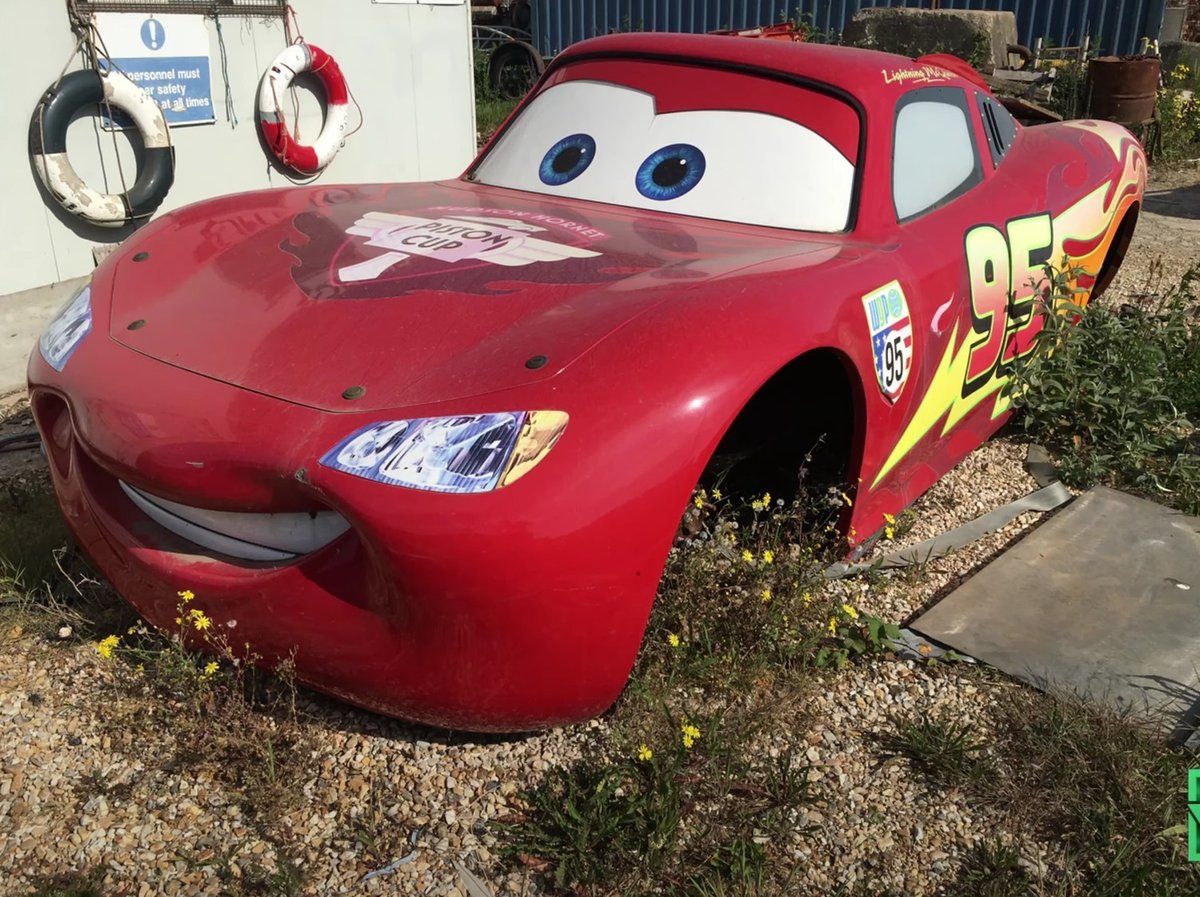
Ask anyone to picture an animated race car, and chances are, the bright red, number 95, Lightning McQueen from Pixar's Cars universe instantly springs to mind. He's a cultural icon, a symbol of speed, determination, and ultimately, heart. But have you ever wondered about Lightning McQueen's real-life car inspiration? Was he based on a specific model you can find on the track or in a showroom? The truth is far more intricate and fascinating than a simple one-to-one replica.
Pixar's designers, led by the visionary John Lasseter, didn't just pick a single car and cartoonify it. Instead, they masterfully wove together design cues from a rich tapestry of automotive history and racing tradition, creating a stylized composite that is both instantly recognizable and deeply appealing. This intentional blend gives McQueen his unique personality and timeless appeal, making him a true hot-rodding, performance-oriented stock car with an approachable face.
At a Glance: What Inspired Lightning McQueen?
- NASCAR Stock Cars: The foundational silhouette, broad front, and emphasis on sponsor decals and bold numbers.
- Aerodynamic Racers: Smooth roofline, rear spoiler, and venting from modern racing principles, including influences from Lola and Ford GT40.
- Chevrolet Corvette: Specific details like the taillights (2004 C6) and air intakes (C1 and C6 models), and initially modeled on the C6 Corvette.
- Classic American Hot Rods: Distinctive headlight placement and styling.
- Vintage Muscle Cars: A powerful and aggressive front-end aesthetic.
- Classic Sports Cars: Sleek side profiles and flowing lines that contribute to a timeless, athletic look.
The Iconic Rookie: Understanding Lightning McQueen's Persona
Lightning McQueen isn't just any race car; he's the professional race car of the Cars universe. From his vibrant red paint scheme, reminiscent of classic racing liveries, to the prominent "95" emblazoned on his sides (a nod to Pixar's founding year, 1995), every detail screams speed and competitive spirit. His initial portrayal as a self-assured rookie quickly endeared him to audiences, his journey reflecting universal themes of perseverance, collaboration, and finding what truly matters.
His character is designed for clear recognition at speed, a critical element for any race car, animated or real. The strong sponsor identity of "Rust-eze" adds another layer of realism, mirroring how real-world stock cars prominently display their backers. But beneath the decals and the confident grille lies a design philosophy far more nuanced than simply translating a real car to animation.
Not Just One Ride: The Composite Design Philosophy
When John Lasseter and his team set out to create Lightning McQueen, their goal wasn't merely to animate an existing car. They sought to craft a character that felt authentic to the world of racing while possessing the expressive qualities necessary for storytelling. This led to the decision to create a stylized composite, rather than a direct replica, drawing inspiration from multiple sources to forge a truly unique vehicle.
McQueen's design places him squarely as a mid-to-late 2000s-era stock car, blending aerodynamic efficiency with an approachable, almost friendly "face." This balance was crucial. Real NASCAR cars, Lasseter noted, could often appear "flat and not very interesting" due to their aerodynamic mandates. Pixar's challenge was to retain that sense of speed and performance while imbuing McQueen with charisma. This meant incorporating elements that gave him a low, wide stance, aggressive fender flares, an elongated front end, a long, smooth hood, and a compact cabin that hints at a single-seater cockpit – all designed to convey speed and agility without sacrificing personality.
Deep Dive into McQueen's Real-World Roots
To understand Lightning McQueen fully, we need to peel back the layers of his design and examine the specific automotive inspirations that forged his iconic look. It's a journey through the heart of American racing and sports car history.
NASCAR Stock Car Heritage: The Heart of a Racer
The most obvious influence on Lightning McQueen's overall form comes directly from NASCAR stock car heritage. You can see it in his broad, rounded front end, which, while stylized, clearly echoes the blunt, powerful noses of early to mid-2000s stock cars. His silhouette, too, with its relatively flat roofline and prominent, blocky rear, is a homage to these track gladiators.
Crucially, the emphasis on sponsor decals and bold racing numbers—like McQueen's iconic "95"—is a direct transplant from NASCAR culture. These elements aren't just aesthetic; they're fundamental to the visual language of stock car racing, ensuring cars are identifiable even at blistering speeds. McQueen's entire presentation, from his livery to his competitive spirit, is steeped in this rich tradition.
The Sleek Edge: Aerodynamic Racing Cues
While drawing from stock car robustness, McQueen also benefits from aerodynamic racing cues found in more advanced performance vehicles. His smooth roofline isn't just for looks; it suggests efficient airflow over the cabin. The visible rear spoiler is a classic racing component, crucial for generating downforce and maintaining stability at high speeds, a principle central to modern racing car design. Even subtle elements like venting, though cartoonishly exaggerated, reflect the importance of airflow management in real-world racing.
John Lasseter himself aimed to improve upon the perceived aesthetic flatness of real NASCAR cars by incorporating elements from sleeker, more dynamic racers. This is where influences from legendary vehicles like the Lola race cars and the iconic Ford GT40 come into play. These vehicles are renowned for their aerodynamic prowess and timeless designs, lending McQueen a certain grace and speed that transcends typical stock car appearances.
Classic Curves: Sports-Car Influence
Beyond the brute force of stock cars, McQueen subtly borrows from the world of classic sports cars. You can discern these influences in his sleek side profiles and the flowing lines that connect his various body panels. These aren't the angular, aggressive lines of every modern supercar, but rather the more organic, timeless aesthetics often found in revered two-seater sports machines. This infusion gives McQueen an athletic elegance, preventing him from looking too boxy or utilitarian, and contributing to his universally appealing design. It's an understated sophistication that hints at performance prowess beyond just raw power.
American Muscle and Hot Rod Soul
Lightning McQueen wears his American automotive heritage proudly. His headlights, for instance, are directly inspired by classic American hot rods. These distinct, often somewhat recessed or stylized headlight designs give him a classic, custom-built feel rather than a mass-produced look. It’s a nod to the spirit of modification and personalization that defines hot rod culture, suggesting McQueen isn’t just a factory vehicle but a finely tuned machine built for speed and individuality.
Furthermore, his front end resembles vintage muscle cars. This isn't just about aggression; it's about a sense of raw power and undeniable presence. Think of the broad, imposing grilles and powerful hoods of muscle cars from the 1960s and 70s. This gives McQueen a formidable, confident "face" that matches his competitive personality.
The Corvette Connection: A Specific Nod
Among the blended inspirations, one particular real-world vehicle stands out for its direct contributions to McQueen's design: the Chevrolet Corvette. Initially, Pixar's designers explicitly modeled McQueen on Chevrolet's C6 Corvette. This provided a strong starting point for his performance-oriented stance and overall proportions.
Specific details further solidify this connection:
- Taillights: McQueen's taillights loosely copy those found on the 2004 C6 Corvette. This gives his rear end a recognizable, sporty flair.
- Air Intake: His air intake design bears similarities to both Corvette C1 and C6 models. This detail, though subtle, provides a powerful link to a lineage of high-performance American sports cars, known for their powerful engines and distinctive design elements.
These deliberate nods to the Corvette lineage help ground McQueen in a specific, celebrated automotive tradition, adding another layer of authenticity to his otherwise fantastical design. If you've ever wondered what car is McQueen, this is where some of the most concrete real-world connections lie, blending the iconic sports car with the stock racer.
The Art of Anthropomorphism: Bringing Cars to Life
While the mechanical inspirations are crucial, a significant part of Lightning McQueen's appeal stems from his anthropomorphic qualities. Pixar's genius lies in how they integrate human-like expressions into his car design. His confident grille acts as a mouth, articulating his emotions, while his expressive headlights serve as his eyes, conveying everything from cockiness to determination to vulnerability.
This careful fusion of realistic car design elements with human facial features is what truly brings McQueen to life. It’s not just a car that talks; it’s a car whose very form communicates. The placement of his "eyes" on the windshield, rather than in the traditional headlight position, immediately sets him apart and allows for a broader range of expressions, making him instantly relatable and endearing. This creative choice is a hallmark of the Cars franchise, influencing how animated vehicles are often designed today.
Beyond the Design: Lightning McQueen's Cultural Impact
Lightning McQueen's intricate design is undoubtedly a masterpiece, but his influence extends far beyond mere aesthetics. He has become a cultural touchstone, a character whose story resonates deeply with audiences of all ages. His narrative arc, from a self-assured rookie focused solely on winning to a mentor who values teamwork and community, delivers powerful, family-friendly messages about perseverance, humility, and collaboration.
His enduring popularity is evident in his appearances across multiple films, animated shorts, and an extensive array of merchandise that spans toys, clothing, and video games. Theme park attractions, such as those found at Disney California Adventure and Disney's Hollywood Studios, further cement his status as a beloved icon, allowing fans to step directly into the world of Radiator Springs.
McQueen's branding—specifically his prominent number 95 and the Rust-eze sponsorship—has become synonymous with family-friendly racing entertainment. He didn't just borrow from real cars; he influenced future animated car design, setting a new standard for how to blend realism, performance, and whimsical anthropomorphism into a single, cohesive character. His legacy is not just in his design, but in the heart and soul he brought to the screen, inspiring a generation of young fans to "kachow!" their way through life's challenges.
Unpacking Common Questions About McQueen's Design
Despite his detailed inspirations, some common questions often arise about Lightning McQueen. Let's clarify a few:
Is Lightning McQueen a specific real-life car model?
No, he is not. While he draws heavily from several iconic real-world vehicles, especially NASCAR stock cars and the Chevrolet Corvette, he is a stylized composite designed by Pixar. This allows him to have expressive features and a unique personality that wouldn't be possible with a direct replica.
Why is Lightning McQueen's racing number 95?
The number 95 is a special tribute to the year 1995, which is when Pixar Animation Studios' first feature film, Toy Story, was released. It's a subtle but meaningful nod to the studio's own history and pioneering spirit in computer animation.
Who was primarily responsible for Lightning McQueen's design?
The design of Lightning McQueen was a collaborative effort led by John Lasseter, one of Pixar's co-founders and the director of the first Cars film. His vision for blending various automotive influences was central to creating McQueen's iconic look.
The Enduring Legacy of Radiator Springs' Champion
Lightning McQueen is more than just an animated character; he's a masterclass in composite design, a testament to the power of thoughtful artistic influence. By meticulously selecting and blending elements from NASCAR stock cars, aerodynamic racing machines, classic sports cars, hot rods, vintage muscle cars, and notably, the Chevrolet Corvette, Pixar created a character that feels both familiar and entirely original.
His bright red livery, the bold number 95, and his anthropomorphic confidence have cemented his place in popular culture. The design team's ability to take disparate real-world inspirations and weave them into a cohesive, expressive, and unforgettable character speaks volumes about their creative genius. So, the next time you see Lightning McQueen speeding across the screen or gracing a toy shelf, remember the intricate tapestry of automotive history that gives him his unique spark. It's a blend of speed, heritage, and pure imagination that truly makes him the champion of Radiator Springs and beyond.